
Iboga Today: Legality, Safety, and Honoring the Tradition
Iboga has lived many lives. For the Bwiti of Gabon it has always been a sacrament. For much of the twentieth-century West it was an unknown, then a banned curiosity. Now, in our own moment, it is being looked at again — by researchers, by veterans, by people who have run out of other options, and by lawmakers. Understanding iboga today means holding three threads at once: how it is being used, where it is legal, and how it can be approached without repeating the old patterns of extraction.
How iboga is being used now
Beyond its ceremonial home, iboga’s modern reputation rests largely on two areas of interest.
The first is addiction interruption. For decades, people have reported that a single ibogaine session dramatically reduced opioid withdrawal and cravings. The research here is real but still early — drawn largely from observational studies and small trials rather than the large randomized, placebo-controlled studies that establish a treatment as proven. The signal is promising enough that scientists keep returning to it; it is not yet settled medicine.
The second is trauma. In 2024, Stanford Medicine researchers published a study in Nature Medicine following thirty U.S. special operations veterans with traumatic brain injury who received ibogaine — combined with magnesium to help protect the heart — at a clinic in Mexico. The reported results were striking: large reductions in PTSD, depression, and anxiety symptoms, sustained at least a month after treatment. It is important to be precise about what this was: a small, open-label, observational study with no control group. It is a beginning, not a conclusion. But it was striking enough to help prompt Texas, in June 2025, to commit $50 million toward FDA-tracked ibogaine clinical trials — one of the largest public investments in psychedelic research in U.S. history. Those trials were not yet open to the general public as of early 2026.
A patchwork of laws
Iboga’s legal status is one of the most confusing things about it, because there is no single global answer — only a patchwork that shifts from country to country and, in the U.S., from state to state.
- In the United States, ibogaine is a Schedule I controlled substance at the federal level, meaning it is prohibited outside approved research.
- In Gabon, iboga is legal and culturally protected, honored as a national treasure.
- Mexico does not schedule or regulate ibogaine, which is why it has become the most frequently used destination for those seeking treatment.
- Portugal decriminalized the personal possession of all drugs in 2001 — an important distinction, because decriminalization of possession is not the same as the legalization of commercial treatment, and the space for clinical operations remains less clearly defined.
- Several countries, including France, banned ibogaine outright after reported fatalities.
This is why retreats are most often held in places such as Baja Mexico and Portugal: jurisdictions where the legal footing is clearer or more permissive than in countries that prohibit the medicine entirely. Anyone exploring this work should understand the legal reality of wherever they are considering going, rather than assuming a single rule applies everywhere.
The thread that ties it together: honoring the tradition
It would be possible to talk about iboga’s research and legality as if the plant appeared from nowhere — as if it were simply a molecule waiting to be optimized. To do so would be to repeat an old mistake.
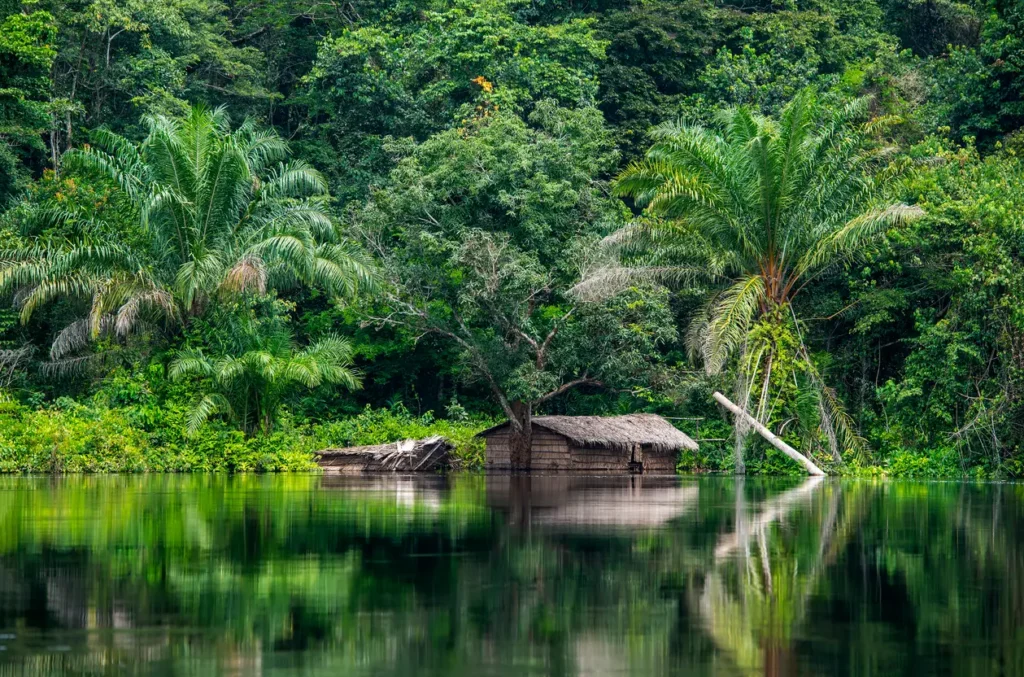
Iboga comes from a specific forest and a specific people. The Bwiti of Gabon developed, refined, and protected this knowledge over generations, often at great cost. As Western demand has grown, so has the danger of extraction: wild plants poached to feed an export market, intellectual-property claims staked on knowledge that was never the claimant’s to begin with, and profit flowing everywhere except back to the communities of origin. Advocates have not minced words, describing iboga as the psychedelic world’s “blood diamond” if this goes unaddressed.
There is a better path, and it already exists in outline. Gabon was the first nation to ratify the Nagoya Protocol, the international agreement built on a simple principle: when a community’s traditional plant knowledge is used, that community should consent and share in the benefits. Organizations such as Blessings of the Forest are working to build a fair-trade iboga supply rooted in reciprocity, environmental sustainability, and direct support for Gabonese villages — so that, as they put it, healing in the West also strengthens the communities who have safeguarded this medicine all along.
To engage with iboga responsibly today is to keep all three threads in hand at once. To take the science seriously without overstating it. To respect the law and the real risks. And — never as an afterthought — to honor the forest the medicine comes from and the people who have carried it. The plant’s future, and the integrity of this whole movement, depends on remembering that iboga was never ours to begin with. It was given. The least we can offer in return is reverence, and reciprocity.
This article is educational and not medical or legal advice. Iboga and ibogaine carry serious risks, and their legal status varies widely; consult qualified professionals before making any decisions.
Sources
- Magnesium–ibogaine therapy in veterans with traumatic brain injuries — Nature Medicine (2024)
- Drug safely treats PTSD in vets — Stanford Report
- Stanford Study Shows Ibogaine Reduces PTSD and Depression — summary of findings
- Is Iboga Legal? Country Guide 2026 — Bwiti House
- Ibogaine’s Legal Status by Country (2026) — Experience Ibogaine
- Legal Status of Ibogaine by Country (2026) — Avante Ibogaine
- The Promise of Nagoya — Georgetown Journal of International Law
- Gabon Takes First Step Toward Legal Export of Sustainable Iboga — Lucid News
- The psychoactive drug ibogaine could save lives — National Geographic